
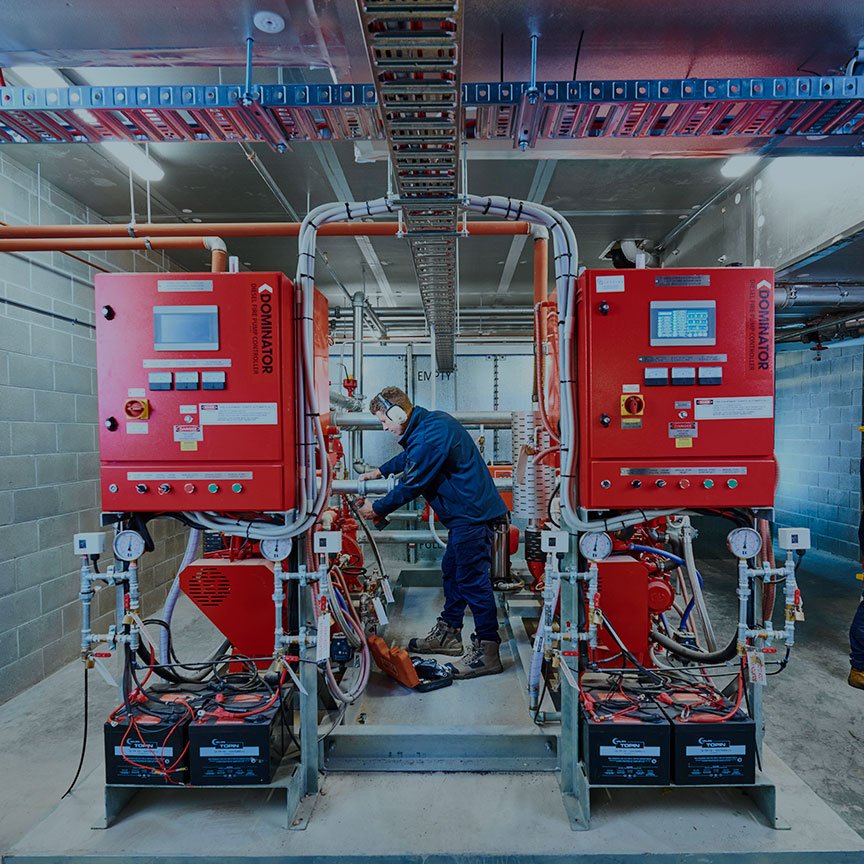
Most people picture a pump as a single mechanical box doing one straightforward job: push water, keep pressure up, done. The reality involves a surprising number of interconnected decisions that property owners never think to question until something underperforms during an actual event. A fire sprinkler system pump in Australia only works reliably when several less obvious details get handled properly, and this post gets into exactly those details rather than repeating the standard overview everyone’s already read somewhere else.
Suction Design Causes Hidden Failures
Drawing water from a storage tank positioned poorly relative to the pump inlet can cause cavitation, tiny vapour bubbles forming and collapsing violently inside the pump casing, chewing through impellers over time and reducing performance exactly when full capacity matters most. That failure mode develops slowly and quietly, which means a pump can run for years showing gradually declining output before anyone connects the dip to a suction design flaw from the original installation. Getting tank elevation and pipe sizing right at the outset avoids a problem that’s genuinely expensive to diagnose once already underway.
Performance Curves Need Matching
Fire sprinkler system pump selection isn’t just about picking something powerful enough to cover worst-case demand; it’s about matching the pump’s actual performance curve to what the specific pipe network needs across its full operating range. An oversized pump can overpressurize remote heads or nearby pipework, while an undersized one leaves the furthest points in a building starving for flow precisely when multiple heads activate together. Engineers who skip proper hydraulic calculation and simply round up to the next available pump size risk a system that technically has enough grunt but delivers it in the wrong place.
Controllers Talk To Fire Panels
The pump controller isn’t a standalone unit quietly doing its job in isolation; it’s wired directly into the building’s fire indicator panel, reporting start signals, running status and fault conditions in real time so building management and attending brigades know exactly what the pump is doing throughout an event. A controller fault that goes unreported because the signalling link was never properly commissioned means nobody discovers the pump failed to start until well after it should have been running. That integration between mechanical and electrical systems is where installation shortcuts genuinely show up later.
Vibration Wears Pipework Down
A running pump generates mechanical vibration that transmits directly into rigid pipework unless flexible couplings and proper isolation mounts break that connection deliberately. Left unaddressed, that vibration fatigues joints and fittings over years of regular testing and occasional real activation, occasionally leading to leaks appearing in locations with nothing obviously to do with the pump itself. Installers who skip proper vibration isolation during commissioning are essentially trading a small upfront cost for a slow mechanical problem that surfaces well after the original contractor has moved on to other work.
Relief Valves Stop Overheating
Fire sprinkler system pump sets running during a no-flow test, where the pump operates but water isn’t being discharged anywhere, generate heat that has nowhere to go without a properly functioning relief valve circulating a small amount of water back to the tank. Skip that relief circuit or let it fail quietly, and a routine test run can genuinely overheat the pump, damaging seals and bearings during exactly the maintenance activity meant to confirm everything’s working. It’s a detail that sounds minor until someone’s explaining why a test run caused actual equipment damage.
Certified Sets Beat Assembled Parts
Australian standards require pump sets to be tested and certified as a complete assembly, not individually approved components bolted together on site and assumed to work as a package. A contractor sourcing a certified engine from one supplier and a pump from another, then assembling them independently, bypasses that assurance entirely, even if every individual part carries its own approval somewhere. Specifying a genuinely certified, factory-tested set removes that assembly risk completely, giving building owners documentation reflecting how the unit performs together rather than how its parts perform separately.
Final Thoughts
None of this comes down to bolting equipment together and assuming compliance follows automatically. A fire sprinkler system pump in Australia depends on suction design, proper hydraulic matching, and integration with fire panel monitoring that most property owners never think to ask about. Properties built around these considerations tend to avoid the slow, quiet failures that only surface once genuine pressure is actually needed, precisely because someone paid attention to the details most installations skip entirely.