
When it comes to protecting skin health in a sun-heavy climate, most people start by looking for a skin cancer doctor in the Gold Coast area is known for, especially when regular checks become part of their routine. Because this region gets such strong UV exposure and people spend so much time outdoors, skin checks along with proper diagnosis carry a lot of weight for long term health. What this article will explain is how skin cancer detection and treatment works, what happens in a consultation, and why acting early matters this much when sun exposure is this constant.
Why Skin Cancer Risk Is Higher in Coastal Regions
Higher rates of skin cancer diagnosis are seen in places where sun exposure stays strong across the whole year. UV radiation, over a period of time, damages skin cells, and the more exposure keeps happening without protection, the more chances rise for abnormal cell growth to occur. Sun damage keeps building up because of outdoor work, beach time, and a climate that stays warm most of the year, and this is exactly why regular screening turns out so necessary for people who live in places like this.
What Happens During a Skin Cancer Check
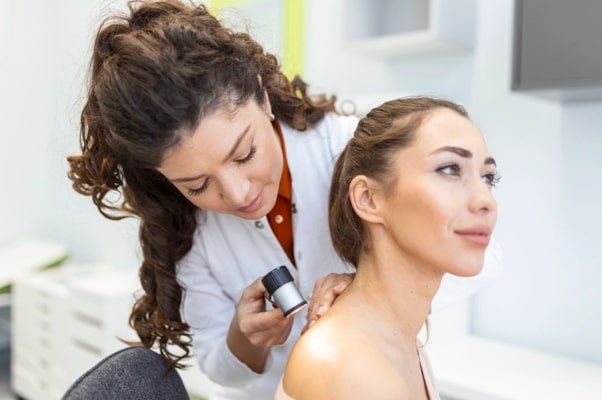
A full body assessment is what a typical skin examination usually involves, done with special equipment such as dermatoscopes, so that moles, spots, and lesions can be looked at up close. Changes in size, shape, colour, and texture get checked by professionals with proper training, since early signs of skin cancer can often be pointed to by these. Not much time gets taken by most checks, nothing invasive happens during them, and often, one appointment alone is enough to get it done.
Among the key signs that usually get assessed, these are included:
- Moles or spots showing asymmetry
- Borders that look blurred or irregular in shape
- Colouring within one single spot that looks uneven
- A diameter bigger than what a pencil eraser has
- Spots that change, itch, bleed, or keep evolving with time
How Often Should Skin Checks Be Done
Once a year is generally how often skin checks get recommended, particularly for those with fair skin, a family history that involves skin cancer, or a lot of sun exposure over time. For those who already had skin cancer once, or who have a higher number of moles, six month intervals might be needed instead. Changes can be tracked over time when monitoring happens regularly, and this often turns out more useful than relying on just one examination done alone.
What Types of Skin Cancer Are Commonly Diagnosed
Through screening, three main types of skin cancer usually end up getting identified.
Basal cell carcinoma, being the most common among these, tends to grow at a slow pace most of the time, and often, what shows up is a bump that looks pearly, or sometimes a patch that stays flat and scaly.
Squamous cell carcinoma, in comparison, has the tendency to develop at a quicker pace, and a red, scaly patch is often how it appears, or in some cases, a bump that stays firm and does not heal.
Melanoma, although not as common, turns out more serious in nature, mainly because other parts of the body can be reached by it once it spreads, especially when detection does not happen in time. A mole that is new, or one that keeps changing with irregular features, is often how this presents itself.
What Treatment Options Are Available
How much treatment differs depends largely on the type of skin cancer, its size, where it is located, and also how early detection took place. Among the approaches that are commonly used, these are included:
- Surgical excision, through which the affected tissue gets taken out
- Cryotherapy, where abnormal cells get destroyed using freezing
- Topical treatments, mainly applied for lesions that stay superficial or very early
- Curettage together with electrodessication, applied for certain basal or squamous cell cancers
- Mohs surgery, which makes precise removal possible in areas considered cosmetically sensitive
Under local anaesthetic, most of these treatments get carried out, and because outpatient procedures are how they get completed, recovery time usually stays short for cases that got caught early.
Does Early Detection Really Make a Difference
Yes, and quite a big difference too, is what early detection actually makes. Simpler and less invasive is generally how treatment turns out when skin cancer gets identified during its initial stages, and higher too is what success rates tend to become. However, when diagnosis gets delayed, particularly in melanoma cases, deeper into the skin is where cancer cells may spread, or sometimes even other organs get reached, making treatment a lot more complicated than it needs to be.
What Increases the Risk of Developing Skin Cancer
In raising the risk of skin cancer, several factors tend to play a role, such as the following:
- Fair skin, light hair, or eyes that carry a light colour
- A history that involves sunburns, particularly ones that happened in childhood
- Sun exposure that keeps happening often, without protective measures being taken
- Tanning beds being used on a regular basis
- Skin cancer that runs somewhere in the family
- A large number of moles, or moles that look unusual in appearance
Figuring out how often screening should take place becomes easier once personal risk factors are properly understood.
How to Prepare for a Skin Cancer Appointment
Before heading to a consultation, avoiding nail polish or makeup helps a lot, since clear visibility during the examination can get affected otherwise. Going through the full body check also becomes easier when clothing worn is loose and comfortable. Useful context during the assessment can also be given if moles or spots that changed recently get noted down beforehand.
Conclusion
Especially in regions where sun exposure stays heavy throughout, timely treatment along with regular screening remain what work best for managing skin cancer risk. A real difference often gets made when people consult a skin cancer doctor. Gold Coast locals put their trust in for routine checks, since this helps abnormalities get caught early, and proper treatment is accessed before things get a chance to progress further. Simple steps that support wellbeing over the long run include staying proactive about skin health, understanding what factors raise personal risk, and attending screenings on a regular basis.